
Inspired by Jack: Middlemarch
More thoughts on vocation, this time from George Eliot

Dear Friends,
I’ve written a fair bit about vocation over the course of this newsletter. It’s a subject I think about a lot, as an academic on the job market (sort of), as a young parent, and as a writer. It was also a subject important to C. S. Lewis, who thought rigorously about what forms of work were his to do and what were distractions from his purpose. You can find some of my prior reflections on work here, here, and here.
But I’m returning to the subject again, because I’ve spent a lot of time lately with George Eliot’s Middlemarch, and it’s impossible to encounter that book without grappling afresh with the purpose of work and the nature of our individual callings. I’m very far from the first to talk about this aspect of the novel. It has taken me longer than I expected to write this letter, because I felt the compulsion to say something new or unexpected. I’m setting aside that urge, though. Instead, I just want to tell you what I noticed on this re-read, and what I’m taking away. I think Eliot’s wisdom bears repeating.
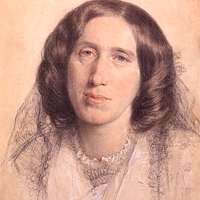
This is the “Inspired by Jack” series (long-time readers will know that I like to refer to C. S. Lewis by his chosen nickname), and so let me start by telling you a bit about Lewis’ reading of the novel, before I give you my own reaction. He read Middlemarch multiple times with enjoyment. In a 1918 letter to his father, while recuperating from trench fever in a Red Cross Hospital in France, he relates, “I am still at Boswell, and have also begun ‘Middlemarch’. You see I am quite ‘caught’ by George Eliot’s books” (Letters I.362). He mentions reading it again in 1930 during an illness and in 1942 or ‘43 in the midst of his wartime lecture travel, and he alludes to it in letters as late as 1959. In 1939, he expressed his appreciation of Eliot to his friend and former pupil, Dom Bede Griffiths: “Yes, I do like George Eliot…. The best of all her books as far as I have read is Middlemarch. It shows such an extraordinary understanding of different kinds of life—different classes, ages, and sexes” (Letter to Dom Bede Griffiths, 1939, II.257).
That remark about Eliot’s breadth of understanding cuts right to the heart of the book.
Middlemarch follows the fortunes of the residents of a fictional town in the English midlands. Though it was published serially from 1871–72, it is set in the years leading up to the Reform Act of 1832. It concerns itself with land management, medical reform, local and national politics, religious enthusiasm, murder, and, most poignantly, the conflict between love and ambition.
At the book’s heart are two young idealists: Tertius Lydgate, a doctor who dreams of bringing medical advancement to Middlemarch, and Dorothea Brooke, a gentlewoman who yearns for some great and holy cause. Both make unfortunate marriages and must figure out how to live within the constraints which their relationships, their community, and their historical moment place upon them.
That’s the no-spoilers synopsis. But a couple of further plot details are important for what I’m going to say in this analysis. So, if you don’t want to know anything about the ending of Middlemarch, look away now. Feel free to come back when you’ve finished. I’ll be right here, waiting.
Still here? Lovely.
What you need to know is that, in the end of the book, Lydgate gets into debt, loses his reputation as a medical practitioner, and is forced to leave Middlemarch in disgrace. His life and career prove, in the end, mediocre. The circumstances of his marriage and the judgment of society break him.
Dorothea’s case is more ambiguous. Her first marriage, to the scholar Edward Casaubon, disappoints all her ideals: she had hoped to find meaning in serving her husband’s grand academic ambitions and instead discovers that his work is trivial and his character pitiful. When he dies, she is left to manage his estate and to try to find some new cause. In the end, she chooses to marry Casaubon’s cousin, Will Ladislaw, and, thanks to a stipulation in Casaubon’s will, to give up most of her fortune. All her grand ideas—of supporting Lydgate’s hospital, or founding a model community, or in some other way materially improving the lives of as many people as possible—come to nothing, in the end. Ladislaw becomes a politician, and she a politician’s wife.
Lewis, incidentally, thought this conclusion a disappointment: “Re-read Middlemarch in trains last Vac. with great enjoyment, only the marrying Dorothea to Ladislaw at the end is an anticlimax” (Letter to Arthur Greeves, 1943, II.549). His opinion echoes that of several characters in the novel. Eliot remarks in the final chapter that “Many who knew her, thought it a pity that so substantive and rare a creature should have been absorbed into the life of another, and be only known in a certain circle as a wife and mother” (Modern Library edition, 886).
But this ending is precisely Eliot’s point in telling this story. She gestures towards it from the very first page which offers a meditation on the life of St. Teresa of Ávila:
Theresa’s passionate, ideal nature demanded an epic life…. She found her epos in the reform of a religious order….
Many Theresas have been born who found for themselves no epic life wherein there was a constant unfolding of far-resonant action…. With dim lights and tangled circumstance they tried to shape their thought and deed in noble agreement; but after all, to common eyes their struggles seemed mere inconsistency and formlessness; for these later-born Theresas were helped by no coherent social faith and order which could perform the function of knowledge for the ardently willing soul. (n.pag.)
On the next page, we meet Dorothea Brooke, our latter-day Saint Teresa, who wears old-fashioned clothes and memorizes Pascal. And so we are warned, from the very beginning, that this novel will be the story of a thwarted saint, at odds with her society.
Throughout the book, we see how Dorothea is misunderstood by her family and her community, who frequently wish that she would conform to their expectations of normal feminine behavior. These conflicts are rarely rancorous, but they are persistent and limiting.
Probably the most famous passage in Middlemarch is the very last paragraph, which describes Dorothea’s fate:
Her finely-touched spirit had still its fine issues, though they were not widely visible. Her full nature, like that river of which Cyrus broke the strength, spent itself in channels which had no great name on earth. But the effect of her being on those around her was incalculably diffusive: for the growing good of the world is partly dependent on unhistoric acts; and that things are not so ill with you and me as they might have been, is half owing to the number who lived faithfully a hidden life, and rest in unvisited tombs. (888)
I never read that without crying a bit.
The genius of Middlemarch is that its tale of thwarted saints is not wholly tragic. Dorothea’s nature must ‘break its strength’ to fit into the channels open before her. That painful image nevertheless reminds us that the value of a life is not any single great act. The small good we can do in our own time, our own community, matters. Dorothea blunders. She throws herself into unworthy causes. But her love and her labor, even when wasted, aren’t meaningless.
And this is the context for Middlemarch’s examination of work: the struggle to live a good life in an inhospitable world, and the goodness inherent to that struggle.
I was surprised, on this reading, to find that the character who struck me most forcibly was not Dorothea, but one whom I’d forgotten since my last read: Caleb Garth. Garth is a property manager and man of business who struggles to support his family because he is motivated by good will towards his neighbors and a delight in good work.
When, in the middle of the novel, he is granted the management of a new estate, he is thrilled, not so much because his family desperately needs the income (though this is certainly the case), but because he will no longer have to see the land mismanaged. He declares:
It’s a most uncommonly cramping thing… to sit on horseback and look over the hedges at the wrong thing, and not be able to put your hand to it to make it right. What people do who go into politics I can’t think: it drives me almost mad to see mismanagement over only a few hundred acres. (427)
This desire to see work done well is, in some ways, a disadvantage to Garth: he is willing to work too hard for little reward. This, paired with his generosity towards undeserving friends, puts great strain on his wife and children. But they do not attempt to change him, and in the end, the effect of his life is, like Dorothea’s, “incalculably diffusive.”
Caleb Garth, unlike Dorothea Brooke, has already found his work and learned to do it well. Significantly, we do not learn precisely what guided him in choosing his work: the novel tells us that he had run an unprofitable “building business, which he had unfortunately added to his other avocations of surveyor, valuer, and agent” (242). These career choices are likely dictated, not by passion, but by class and opportunity—but Garth makes the most of them. Whatever he puts his hand to, he does earnestly, for the good of others, not himself.
And that’s the lesson at the heart of Middlemarch: that the way we do our work matters as much as, or more than, the work we do. This isn’t to say that we should choose work that we know to be wrong, or for which we are poorly suited. (This lesson is learned by another character in the novel, Fred Vincy.) Rather, what Eliot suggests repeatedly is that good work, however apparently insignificant, makes a difference in the world.
In this regard, I was particularly struck by a moment, midway through the novel, when Eliot turns to discuss her own chosen work: writing. The novel is discussing the significance of a misplaced letter, which becomes the engine for the latter half of the plot. But the narrator takes a step back to imagine the larger potential of the written word.
Who shall tell what may be the effect of writing? If it happens to have been cut in stone, though it lie face downmost for ages on a forsaken beach, or ‘rest quietly under the drums and tramplings of many conquests,’ it may end by letting us into the secret of usurpations and other scandals gossiped about long empires ago: — this world being apparently a huge whispering-gallery…. [A] bit of ink and paper which has long been an innocent wrapping or stop-gap may at last be laid open under the one pair of eyes which have knowledge enough to turn it into the opening of a catastrophe. (436)
Dorothea and Garth, in embracing their work, do incalculable good. Writing, however, because of its potential lifespan, seems more ambiguous. Here, Eliot imagines how writing may either destroy or illuminate, far beyond the writer’s control. It is an awesome, unpredictable power, easy to forget about in the everyday labor of recording thoughts in language.
But perhaps that unpredictability is a gift. If writers cannot know the long-term effect of our words, all we have to focus on is our work in the moment, as we would with any other task. Are we speaking the truth? Are we motivated by charity? Are we using language skillfully and intentionally?
Whether our lives are hidden or hyper-visible, are we living faithfully?
William Wordsworth writes, in “Lines Composed a Few Miles above Tintern Abbey”—which is, by the way, one of my favorite poems—of “that best portion of a good man’s life, / His little, nameless, unremembered, acts / Of kindness and of love.” Eliot imagines how those unremembered acts can suffuse a lifetime and, ever so slightly, in spite of all opposition, change the world.
May you encounter those small kindnesses this week,
Sarah